

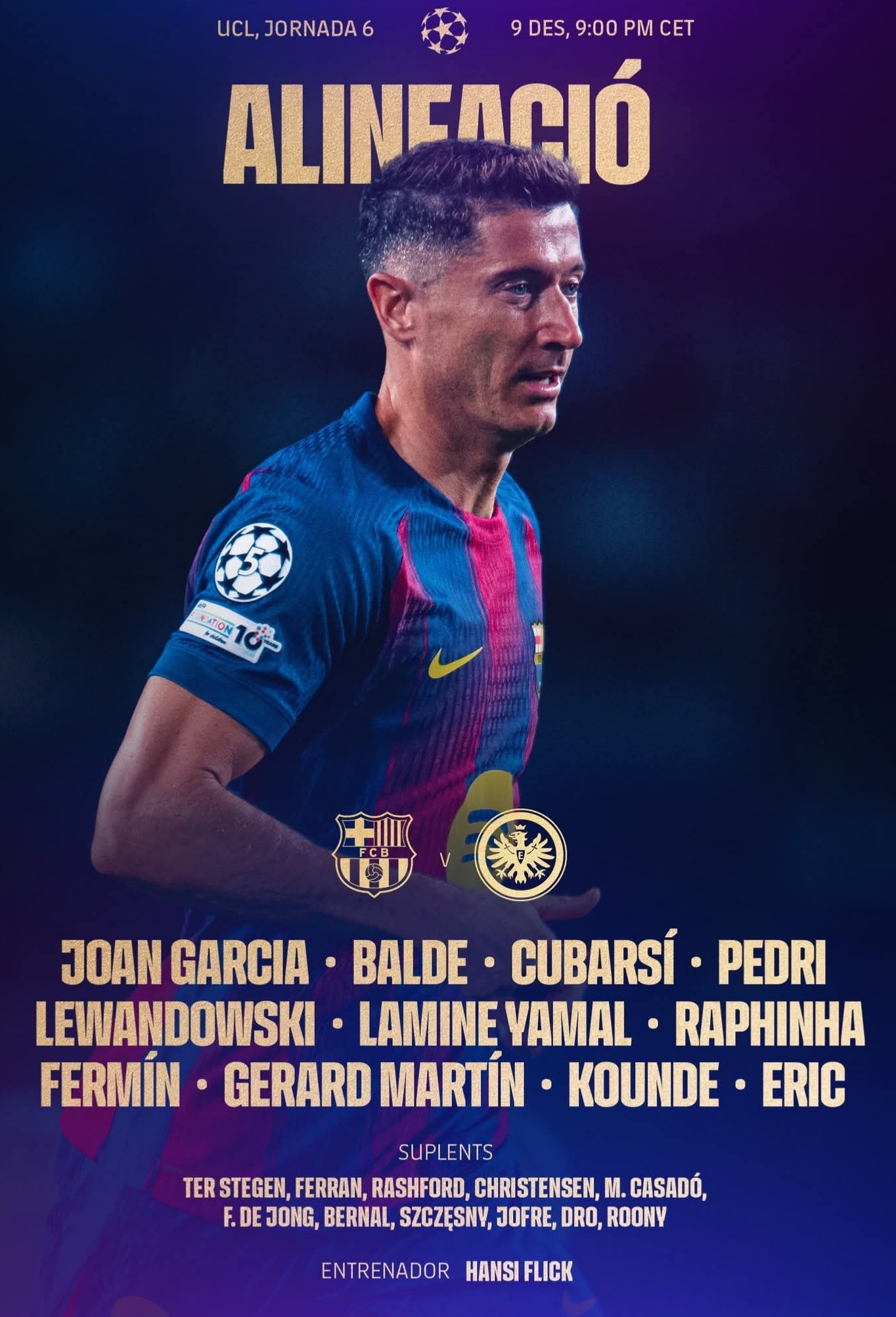
When a team sheet drops before a heavyweight clash, reactions explode instantly across social media. But some names do more than generate buzz—they elevate expectations. Raphinha starting for Barcelona is exactly that kind of catalyst. It’s a decision that sends a message to the opponents, electrifies the supporters, and defines the rhythm Barcelona intend to impose on the pitch. The article highlights this perfectly: Raphinha isn’t just a player; he’s a declaration of intent.
What makes this moment so interesting is how one selection can symbolize an entire tactical blueprint. Barcelona, a club built on artistry, rhythm, and calculated chaos, thrive when their wingers impose fear. Raphinha embodies that philosophy. The article paints him as a force of nature—explosive on the ball, relentless off it, and emotionally charged in every duel. His inclusion is more than a technical choice; it’s psychological warfare.
The narrative reveals how Raphinha’s profile adds dimensions Barcelona desperately need in high-stakes matches. When he starts, the pitch stretches. Defenders retreat. Spaces open. Barcelona’s midfielders suddenly have more freedom to dictate tempo, while the striker benefits from increased room to operate. His ability to cut inside, create overloads, and destabilize compact defensive blocks transforms Barcelona from a patient, possession-heavy team into an unpredictable attacking threat.
But the deeper intrigue lies in what Raphinha symbolizes culturally within the squad. His fire, his pressing intensity, and his insistence on fighting for every duel inject a sense of urgency into the entire lineup. Barcelona, at times, struggle when their play becomes too methodical or too comfortable. Raphinha counters that tendency with verticality and velocity. He embodies the modern winger: technical yet gritty, creative yet industrious. The article captures how his presence inspires confidence, lifts teammates, and energizes fans who crave both beauty and battle in equal measure.
Another fascinating point the article subtly communicates is the strategic reasoning behind his selection. Starting Raphinha is rarely accidental. It often indicates the coaching staff have identified vulnerabilities—perhaps a full-back who doesn’t track runners well or a defensive line that leaves too much space behind. By choosing Raphinha, Barcelona are choosing to exploit those weaknesses ruthlessly. It signals ambition. It signals bravery. It signals that Barcelona plan to seize control early rather than react later.
The article also celebrates the emotional response of fans. In modern football, where narratives spread instantly, a name like Raphinha on the starting XI creates anticipation of something spectacular. Supporters watch him for the moments—those sharp cuts inside, the sudden accelerations, the curling strikes—that can flip a match on its head. When he starts, fans don’t just expect football; they expect fireworks.
Ultimately, the article presents “Raphinha STARTS” as more than lineup information. It is a preview, a promise, and a threat rolled into one. It tells a story of a player who changes the pulse of a game before the ball is even kicked. And for Barcelona, that spark could be the difference between a tense match and a triumphant performance.
